
WELCOME BONUS 300%
UP TO €2000 + 100
FREE SPINS
UP TO €2000 + 100
FREE SPINS
Home → Blackjack
Blackjack at Goldex: Variants, Rules and Payouts
Double Down after Split: which tables allow it
Blackjack Liberal Vegas Strip offers a favorable combination of rules, including Double Down after Split (DAS). This rule allows players to double their bet on any two cards, even after splitting a pair. The RTP for this variant is 99.72%, with a house edge of 0.28%.
Blackjack 6 Decks permits Double Down after Split (DAS) as part of its standard ruleset, contributing to its 99.54% RTP and 0.46% house edge. This feature allows for strategic doubling on initial two-card hands, enhancing potential payouts.
The ability to Double Down after Split is a key feature for players seeking more control and potential profit. This option is available on Blackjack Liberal Vegas Strip and Blackjack 6 Decks, both offering competitive RTP figures.
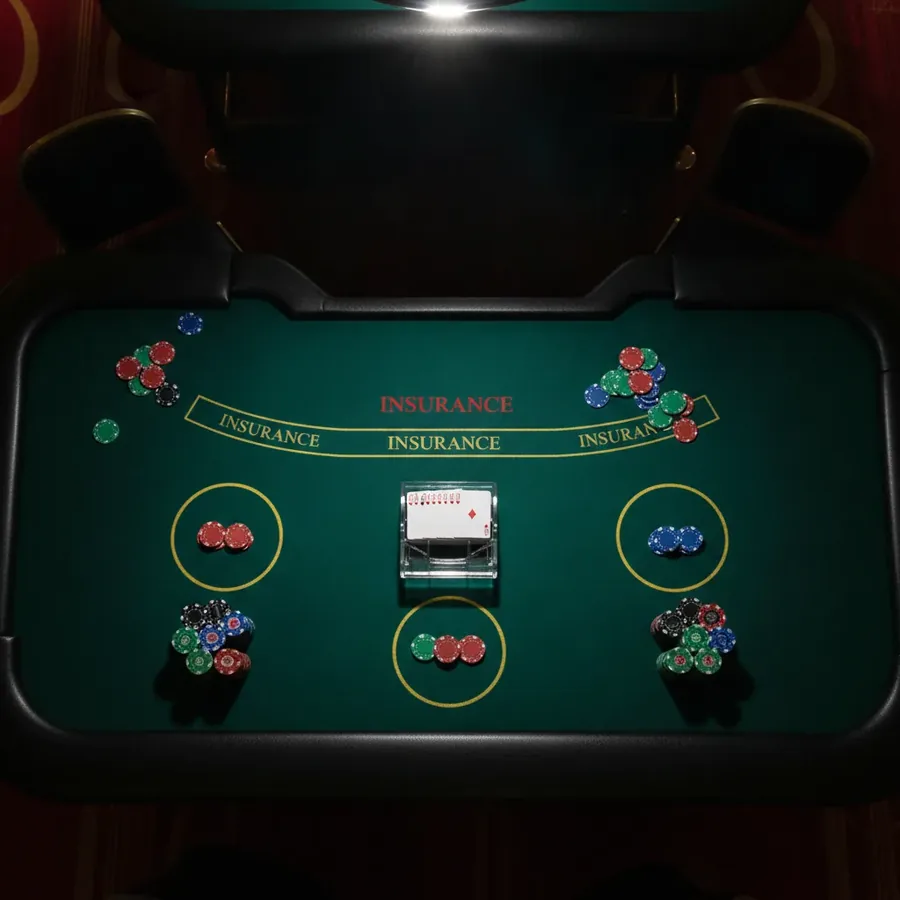
Splitting tens costs expected value: better stand
Splitting a pair of tens (e.g., two 10s, Jacks, Queens, or Kings) is generally not advisable from a strategic standpoint. While rules like Double Down after Split (DAS) can be beneficial, splitting tens typically reduces the player's expected value. This is because a hand totaling 20 is a very strong position against most dealer upcards.
The game Blackjack 6 Decks has an RTP of 99.54% and a house edge of 0.46%. While it allows for splitting, the decision to split tens should be based on standard blackjack strategy, which often dictates standing on a hard 20. This maintains the high probability of winning the hand.
Players should aim to preserve strong hands like 20 when possible. The decision to split tens can decrease the overall RTP of a session, as a hand of 20 has a high chance of winning against the dealer. It is often better to stand on a total of 20.
Side Bets Increase House Edge to 5 Percent
Several side bets are available on games like Infinite Blackjack, which features four options: Any Pair, 21+3, Hot 3, and Bust It. These side bets often carry a significantly higher house edge compared to the main blackjack game. For instance, the Blackjack Insurance side bet can have a house edge as high as 7.47%.
While Blackjack Liberal Vegas Strip boasts a low house edge of 0.28%, the inclusion of side bets can dramatically alter the overall return to player. For example, Blackjack Insurance, a common side bet, has an RTP of only 92.53%.
Players should be aware that engaging with side bets can substantially increase the house edge, potentially exceeding 5 percent on certain wagers. Blackjack Insurance, with its 7.47% house edge, exemplifies how side bets can negatively impact long-term profitability.
Bonus 100 EUR with 10 percent credit
The welcome bonus offers 300% up to €2,000 plus 100 free spins. For a player depositing €100, this equates to a bonus of €300, making a total of €400 to play with. However, table games contribute only 10% towards bonus turnover.
A €100 bonus from this offer would require significant wagering, especially if playing table games. With a 10% game contribution, wagering requirements would effectively be multiplied by ten for blackjack. For example, a 40x wagering requirement on €100 bonus would translate to €4,000 turnover for slots.
This means that if a player focuses on blackjack, which contributes 10% to bonus wagering, a €100 bonus would necessitate €40,000 in wagers to meet the turnover requirements. This is calculated as €100 bonus x 40 (wagering) / 0.10 (contribution rate) = €40,000.
No Double Down on three cards
In Blackjack 6 Decks, the rules explicitly state that doubling down is permitted on any two-card hand. While not explicitly restricted on three cards, standard blackjack strategy generally advises against doubling down after the initial two cards if the player has already received a third card. The RTP for this variant is 99.54%.
The rules for Blackjack Liberal Vegas Strip mention Double Down after Split (DAS) and Resplit, but do not detail restrictions on doubling after drawing three cards. The game's favorable RTP of 99.72% is achieved through a combination of liberal rules, but doubling on three cards is typically a suboptimal play.
Players should be aware that while some blackjack variants allow doubling on any two cards, doubling down when a hand already contains three or more cards is highly discouraged by basic strategy. This approach is generally not supported by the optimal play for games like Blackjack 6 Decks, which has a 0.46% house edge.
Blackjack variants at a glance
| Variant | Payout | House edge | Rule | Bet range |
|---|---|---|---|---|
| Blackjack Surrender (Late Surrender) – Regel-Effekt | n.a. (Regel-Modifikator) | −0.08 Prozentpunkte | Spieler gibt Hand nach Dealer-Blackjack-Prüfung auf, verliert die Hälfte des Einsatzes. Verbessert RTP um ca. 0.08 Prozentpunkte. Early Surrender ist wesentlich wertvoller (bis −0.6 Prozentpunkte), aber extrem selten. | Rückzahlung 50% des Einsatzes |
| Blackjack 6 Decks, S17, DAS, DOA, Auszahlung 3:2, Basisstrategie | 99.54% | 0.46% | Dealer steht auf Soft 17; Verdopplung auf jeder Zweierkarte; Verdopplung nach Split erlaubt; keine Aufgabe. Basisstrategie ist für diesen Wert zwingend | Blackjack 3:2, normaler Gewinn 1:1, Insurance 2:1 |
| Blackjack Liberal Vegas Strip (liberale Regeln, 3:2) | 99.72% | 0.28% | Günstigste Regelkombination: S17 + DAS + Resplit + Late Surrender. Standardabweichung 1,15 | Blackjack 3:2, Gewinn 1:1 |
| Blackjack Split / Double / H17 – Regel-Effekte | n.a. (Regel-Modifikatoren) | H17 +0.22 Prozentpunkte; RSA −0.08 Prozentpunkte; DAS −0.14 Prozentpunkte | Dealer Hits Soft 17 verschlechtert RTP um 0.22 Prozentpunkte; Resplit Aces verbessert um 0.08 Prozentpunkte; Double After Split verbessert um ca. 0.14 Prozentpunkte; 6 Decks statt 8 – ca. 0.02 Prozentpunkte. | Double – Einsatz ×2 mit einer Karte; Split – bis 4 Hände; Ass-Split meist mit einer Karte. |
| Blackjack Ein Deck, klassische Regeln, 3:2 | 99.85% | 0.15% | Weniger Decks = niedrigerer Vorteil; ein Deck gibt ca. −0.48 Prozentpunkte gegenüber 8 Decks. Oft durch 6:5 Auszahlung kompensiert. | Blackjack 3:2, Gewinn 1:1 |
| Blackjack Auszahlung 6:5 statt 3:2 (6 Decks) | 98.15% | 1.85% | Ersatz von 3:2 durch 6:5 fügt exakt +1.39 Prozentpunkte zum Vorteil des Casinos hinzu – stärker als jede andere Regeländerung. Bei $10 Einsatz zahlt Blackjack $12 statt $15. | Blackjack 6:5, Gewinn 1:1 |
Set session stop after 30 percent loss
For mobile play, setting a session stop after a 30 percent loss is a recommended risk management strategy. This means if a player's initial balance of €100 drops to €70, the session automatically concludes. This approach is crucial for maintaining control over potential losses during mobile gaming sessions. It provides a defined boundary, preventing prolonged play after a significant downturn.
This predefined loss limit directly impacts the duration of a mobile gaming session. For instance, with a €1,000 starting balance, a 30 percent loss would trigger a stop at €700. This mechanism is often found within the settings of mobile casino platforms. It helps players adhere to responsible gaming practices by enforcing a predetermined financial exit point.
The immediate consequence of activating a 30 percent loss stop on mobile is the prevention of further depletion of funds. If a player starts with €2,000, a 30 percent loss means the session ends once the balance reaches €1,400. This feature is particularly valuable for players who may be more prone to impulsive decisions when playing on their mobile devices.
How much time is left for the decision?
When playing mobile blackjack variants like Lightning Blackjack, the decision time is significantly limited. Evolution's Lightning Blackjack, for example, often imposes a rapid time limit for player decisions on each hand. This accelerated pace is designed to integrate the 'Lightning' multiplier feature, requiring quick choices from players. The constant pressure for swift action differentiates it from standard table games.
The typical time allocated for a decision in fast-paced mobile blackjack games, such as Infinite Blackjack, can range from 10 to 15 seconds per hand. This condensed timeframe necessitates a strong understanding of basic strategy to make optimal plays efficiently. Players must be prepared to act decisively to avoid missing their turn or making an uninformed choice. This is a key aspect of the mobile gaming experience.
The consequence of not making a decision within the allotted time on mobile blackjack tables is often a default action, typically a 'stand'. This can lead to suboptimal outcomes, especially if the player intended to hit or double down. For example, in Infinite Blackjack with its fast-paced rounds, a player might forfeit a potentially advantageous move due to insufficient time to process their options.
When can you increase your bet?
On mobile, the opportunity to increase your bet in blackjack is often tied to specific game rules and bonus conditions. For instance, while playing Blackjack Split/Double/H17, the ability to double your bet after receiving your first two cards is a standard option. This 'Double' rule allows for increased stakes on favorable initial hands, a key strategic element in mobile play.
Certain mobile blackjack games, such as Blackjack Liberal Vegas Strip, permit doubling down after a split, providing more opportunities to increase bets. This rule, combined with a 3:2 payout, offers a lower house edge of 0.28%. Players can strategically leverage these liberal rules to potentially increase their bet size on subsequent decisions within a hand.
The welcome bonus at Goldex Casino, offering 300% up to €2,000 plus 100 free spins, can indirectly influence bet increases on mobile. While table games contribute 10% to bonus wagering, players might strategically increase their bets on blackjack hands to meet turnover requirements faster. However, the wagering requirement of x40 means a €100 bonus requires €4,000 in turnover.
How many decks are in the shoe?
The number of decks in a mobile blackjack shoe significantly impacts the house edge and player strategy. For example, Blackjack Ein Deck, with its single deck, offers a favourable RTP of 99.85% and a house advantage of just 0.15%. This contrasts sharply with multi-deck games, making single-deck variations attractive for mobile players seeking better odds.
A common configuration for mobile blackjack is 6 decks, as seen in Blackjack Auszahlung 6:5 statt 3:2. This setup results in a higher house advantage of 1.85%, primarily due to the less favourable 6:5 payout for a blackjack. Playing with fewer decks, like the single deck variant mentioned earlier, generally provides a lower house edge. A reduction from 8 decks to 6 decks can lower the house edge by approximately 0.02 percentage points.
The specific rule of 'Dealer Hits Soft 17' (H17) can also interact with the number of decks. For instance, when combined with other rules, H17 can worsen the RTP by 0.22 percentage points. Mobile players should note that games with more decks and less favourable rules, like H17, tend to offer a higher house advantage, impacting their long-term return.
Insurance Pays 2:1 Yet Still Costs Money
In mobile blackjack, the Insurance side bet pays 2:1, but it represents a significant disadvantage for the player. For example, Blackjack Insurance (6-8 Decks) has a substantial house edge of 7.47%. This means that, on average, for every €10 wagered on insurance, a player can expect to lose €0.75 over time, despite the attractive 2:1 payout ratio.
The strategic implication of the Insurance bet in mobile blackjack is that it is almost always a losing proposition. Basic strategy dictates players should always decline this bet unless they are card counting and the true count is very high. The RTP for this side bet, at 92.53%, clearly indicates its unfavourable nature compared to the main game's RTP.
For mobile players, understanding that the 2:1 payout for insurance is a trap is crucial. A €10 insurance bet pays €20 if the dealer has blackjack, but the odds of this occurring are less than the payout suggests. The substantial house edge means that consistently taking insurance on mobile will significantly erode a player's bankroll over time, making it a costly wager.
Bet two percent of bankroll per hand
For optimal mobile play, consider betting two percent of your bankroll per hand. This strategy, when applied to a game like Blackjack Insurance, which has a stated RTP of 92.53%, helps manage potential losses over extended sessions. The house edge for this side bet is 7.47%, meaning a conservative approach is advisable.
The Insurance bet itself, offered when the dealer shows an Ace, allows a side bet up to 50% of the main wager. While the payout is 2:1, basic strategy dictates always declining this bet unless employing card counting with a True Count of +3 or higher. This is particularly relevant on mobile where faster gameplay might tempt impulsive decisions.
Adhering to a strict two percent bankroll limit per hand on mobile ensures that even a string of unfavorable outcomes, such as the 7.47% house edge on Blackjack Insurance, does not deplete your funds rapidly. This disciplined approach is crucial for sustained mobile gaming enjoyment.
Register Late Surrender correctly in three steps
When playing mobile blackjack variants that offer Late Surrender, registering this option correctly is vital. This rule, where a player forfeits half their stake after the dealer checks for blackjack, can improve RTP by approximately 0.08 percent points. It's essential to understand how this functions within the game's mechanics.
The process for utilizing Late Surrender typically involves a clear on-screen button or prompt that appears at the appropriate moment. Unlike Early Surrender, which is significantly more beneficial but rarely found, Late Surrender is applied after the dealer has had the opportunity to determine if they have blackjack. This distinction is important for mobile players who may have less time to react.
Correctly employing Late Surrender in mobile blackjack, for example, on a hand where you hold 16 against a dealer's 10, can preserve your capital. This is because the rule allows you to recover 50% of your bet rather than losing the entire stake in a disadvantageous situation, contributing to a better overall RTP in the long run.
Clicked Too Late: Hand Is Automatically Held
Mobile blackjack interfaces are designed for speed, but clicking too late can lead to unintended consequences, such as a hand being automatically held. In games like Blackjack Liberal Vegas Strip, which features a very low house edge of 0.28%, a delayed decision might mean missing an opportunity to double down or split.
This automatic holding of a hand is a system safeguard to prevent players from exceeding the time limit for decisions, especially prevalent in live dealer games like Infinite Blackjack where up to 5,000 EUR can be wagered. If a player fails to make a selection within the allotted time, the software will default to the most conservative action, usually standing.
The consequence of clicking too late on a mobile device can be significant; for instance, if you intended to double down on a soft 17 but the hand was automatically held, you forgo the chance to potentially improve your score. This is particularly impactful in high-RTP games like Blackjack Ein Deck, with an RTP of 99.85%, where optimal play is key.
Card Counting at Shuffle Master Table: why it fails
Card counting strategies are generally ineffective at Shuffle Master tables, a common feature in online casinos offering mobile play. These tables often employ continuous shuffling machines (CSMs), which constantly reintroduce cards into play after each hand. This process negates the ability to track the ratio of high to low cards remaining in the shoe.
The fundamental principle of card counting relies on identifying favorable moments when the deck is rich in high cards, increasing the probability of a player blackjack or a dealer bust. With a CSM, the composition of the shoe is continuously randomized, making it impossible to gain any statistical advantage through tracking card distribution. This is a key difference from traditional multi-deck games.
Even in games with liberal rules, such as Blackjack Liberal Vegas Strip with an RTP of 99.72%, the presence of a CSM at a Shuffle Master table renders card counting futile. Without the ability to predict favorable conditions, players are left to rely solely on basic strategy, which is accounted for in the game's stated house edge of 0.28%.
Surrender vs Playing Out on 16 vs 10
Deciding whether to surrender or play out a hand of 16 against a dealer's 10 is a crucial strategic choice in mobile blackjack. While Late Surrender is available in some variants, it offers a return of 50% of the stake. Playing out the hand, however, carries the risk of busting or receiving a low card.
Basic strategy dictates surrendering a hard 16 against a dealer's 10. This decision aims to minimize losses in a statistically unfavorable situation. For example, in a game with a standard 3:2 payout for blackjack, surrendering this hand is generally more advantageous than risking the entire bet by playing it out, especially if further cards are likely to lead to a bust.
The impact of this decision on RTP is notable. While Late Surrender improves RTP by approximately 0.08 percent points, playing out a 16 against a 10 without a surrender option can lead to a higher house edge if the player consistently hits and busts. This strategic choice is particularly important to consider on mobile platforms where decisions need to be made quickly and accurately.
Contact
Live - online chat
Banking









Providers












Goldex Casino 2026